
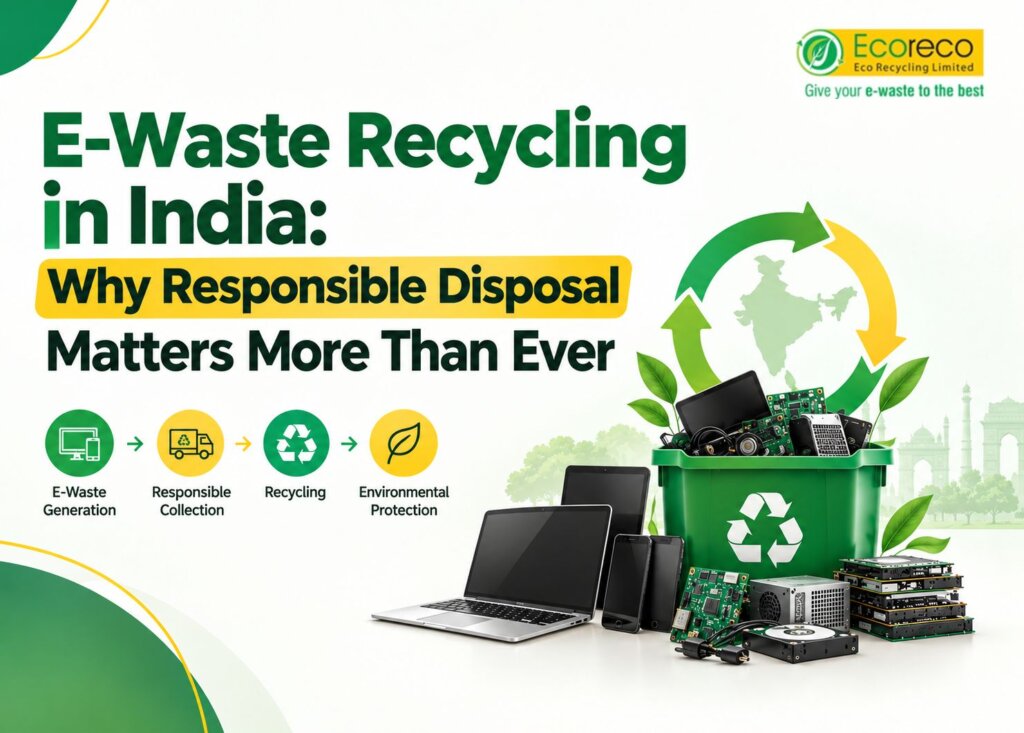
India’s digital economy is expanding rapidly. Smartphones, laptops, servers, televisions, batteries, and smart devices are replaced faster than ever before. While technology improves productivity and convenience, it also creates one of the fastest-growing environmental challenges in the country: electronic waste, commonly known as e-waste.
Organizations and households often store outdated electronics for years or dispose of them through informal channels without understanding the long-term environmental and data-security consequences. Responsible e-waste recycling is no longer optional; it is now a critical part of sustainable business operations and environmental stewardship.
Companies like Ecoreco have helped establish structured e-waste management systems in India through certified recycling, reverse logistics, data destruction, and asset recovery services.
What Is E-Waste?
E-waste refers to discarded electrical and electronic equipment, including:
- Computers and laptops
- Smartphones and tablets
- Servers and networking equipment
- Televisions and monitors
- Printers and office electronics
- Batteries and lithium-ion devices
- Household electronic appliances
Many of these devices contain hazardous materials such as lead, mercury, and cadmium. If handled improperly, they can contaminate soil, water, and air.
The Growing E-Waste Problem in India
India is among the world’s largest generators of electronic waste. According to industry and research sources, e-waste generation is increasing every year due to rapid digitization, shorter device lifecycles, and rising consumer demand.
A major concern is that a significant portion of e-waste still flows through the unorganized recycling sector, where unsafe dismantling methods expose workers and the environment to toxic substances.
Improper recycling practices can lead to:
- Toxic chemical leakage
- Air and groundwater pollution
- Loss of recoverable precious metals
- Severe health risks for workers
- Data theft from discarded devices
This is why certified recycling partners have become strategically important for businesses and institutions.
Why Professional E-Waste Recycling Matters
1. Environmental Protection
Certified recyclers follow scientific recycling and dismantling processes that reduce environmental impact while maximizing material recovery.
Proper recycling helps recover:
- Copper
- Aluminum
- Gold
- Silver
- Rare earth metals
- Reusable plastics and glass
This reduces dependence on raw material extraction and supports a circular economy.
2. Data Security
Old hard drives, servers, laptops, and storage devices may still contain confidential business or personal information.
Professional recyclers such as Ecoreco provide secure data destruction and sanitization services, including onsite shredding and certified disposal processes.
For enterprises, this is essential for regulatory compliance and cybersecurity risk reduction.
3. Regulatory Compliance
India’s E-Waste Management Rules and Extended Producer Responsibility (EPR) regulations require responsible disposal and traceability of electronic waste.
Authorized recyclers help organizations maintain documentation, compliance records, and environmentally responsible disposal practices.
4. Asset Recovery and ITAD
Not all discarded electronics are fully obsolete. Many devices can be refurbished, repaired, or remarketed through Information Technology Asset Disposal (ITAD) programs.
This enables organizations to:
- Recover value from old assets
- Reduce electronic waste volumes
- Support digital accessibility initiatives
- Extend product lifecycle sustainability
How Ecoreco Supports Sustainable E-Waste Management
Ecoreco is recognized as one of India’s early organized e-waste management companies, offering integrated recycling and sustainability services.
Its services include:
- WEEE recycling
- Reverse logistics
- Secure data destruction
- EPR implementation
- IT asset management
- Lithium-ion battery recycling
- Precious metal recovery
The company also operates certified recycling facilities and nationwide collection networks designed to support businesses, institutions, OEMs, and households.
The Future of E-Waste Management
The future of e-waste recycling is shifting toward technology-enabled sustainability. AI-driven classification systems, blockchain-based traceability, smart collection systems, and digital compliance tracking are becoming increasingly relevant in modern recycling ecosystems.
Businesses that adopt sustainable disposal practices today will be better positioned for:
- ESG reporting
- Regulatory readiness
- Sustainable procurement standards
- Circular economy initiatives
- Brand trust and corporate responsibility
Conclusion
Electronic waste is not just a disposal problem; it is an environmental, operational, and compliance challenge. Responsible recycling protects natural resources, prevents hazardous pollution, secures sensitive data, and supports long-term sustainability goals.
Organizations and individuals must transition away from informal disposal practices and work with certified recycling partners that prioritize transparency, compliance, and environmental responsibility.
As India’s digital infrastructure continues to grow, structured e-waste management will play a defining role in building a cleaner and more sustainable future.
FAQs
E-waste refers to discarded electronic and electrical devices such as laptops, computers, mobile phones, printers, televisions, batteries, and networking equipment.
Electronic waste contains toxic substances like lead, mercury, and cadmium that can pollute the environment and create health hazards if disposed of improperly.
Certified recyclers ensure environmentally safe disposal, secure data destruction, regulatory compliance, and proper recovery of recyclable materials.
Extended Producer Responsibility (EPR) is a regulatory framework that makes producers responsible for managing electronic waste generated from their products.
Secure data destruction involves sanitizing or physically destroying storage devices to prevent unauthorized data recovery.
