
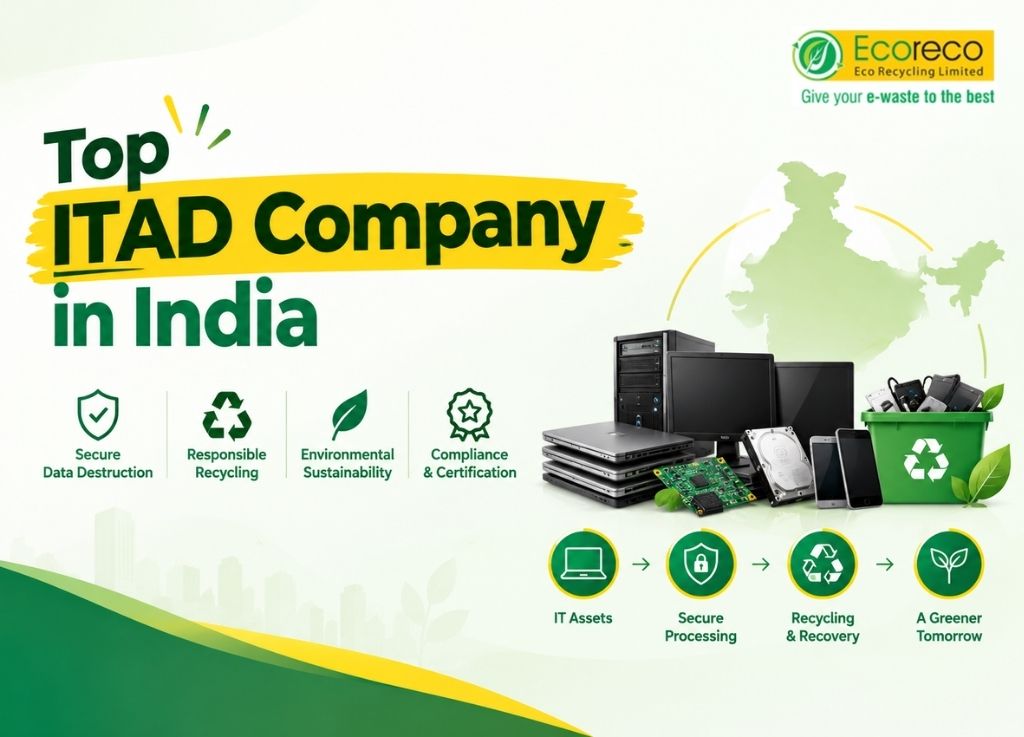
Most organizations don’t think much about what happens to a laptop after it’s decommissioned, until something goes wrong. A hard drive turns up improperly wiped. A batch of old servers ends up with an unregistered scrap dealer instead of a certified recycler. A compliance audit asks for documentation that nobody thought to keep. That’s the moment ITAD stops being a back-office task and becomes a genuine business risk, and it’s exactly the gap that a serious ITAD services provider is supposed to close before it ever becomes a problem.
IT Asset Disposition covers the entire lifecycle of a device once it’s retired: secure data destruction, environmentally sound recycling, and, where possible, responsible value recovery. Done properly, ITAD protects an organization from data exposure and regulatory liability. Done carelessly, it creates exactly the risks it’s supposed to prevent. Eco Recycling Ltd. has spent years building its approach to ITAD around closing that gap completely, and understanding how it reveals a lot about what separates a genuinely dependable ITAD company from one that simply says the right things on its website.
Why So Many ITAD Providers Fall Short of What They Promise
The uncomfortable truth about India’s ITAD sector is that the barrier to calling yourself a “recycler” is lower than most businesses assume. Plenty of operators handle e-waste informally, without proper authorization, without documented data destruction processes, and without any real accountability once a truckload of old IT equipment leaves a client’s premises. For the client, that equipment disappears from view the moment it’s picked up, and whatever happens next is essentially a matter of trust.
That’s the fundamental weakness in how a lot of organizations approach ITAD services today: they treat vendor selection as a logistics decision, who can pick up the equipment fastest or cheapest, rather than a data security and compliance decision. Eco Recycling Ltd. was built on the opposite premise: that ITAD only works if every stage of the process is documented, verifiable, and handled with the same rigor an organization would apply to any other sensitive data process.
What Eco Recycling Ltd. Does Differently
Data destruction happens where the risk actually lives, not after it’s already been taken elsewhere. A lot of ITAD companies transport devices off-site before any data destruction takes place, which means sensitive hardware spends hours or days in transit still carrying live data. Eco Recycling Ltd. brings mobile shredding and degaussing capability directly to a client’s premises, meaning data is irreversibly destroyed before a device ever leaves the building. That single difference removes the entire window of exposure that most ITAD processes simply accept as unavoidable.
Every asset is tracked individually, not processed as a bulk lot. It’s common in the industry for devices to be collected in bulk and processed as a batch, with little individual accountability for what happened to any specific machine. Eco Recycling Ltd. maintains device-level tracking and documentation, so if a compliance question ever comes up about a specific asset, there’s an actual record to point to, not a general assurance that “everything was handled properly.”
Recovery and disposal decisions are made transparently, not left as a black box. Retired IT equipment often still has residual value, whether through refurbishment, resale, or material recovery. Many providers don’t disclose what actually happens to an asset once it’s collected. Eco Recycling Ltd. reports back on outcomes, whether a device was refurbished, its materials recovered, or it was safely destroyed, so clients aren’t left guessing what became of their equipment.
Compliance is treated as an ongoing discipline, not a one-time certificate. Regulatory requirements around e-waste handling in India have tightened significantly, and staying compliant means more than holding an authorization certificate once. Eco Recycling Ltd. maintains active compliance across its operations rather than treating certification as a box checked years ago and never revisited.
National scale without losing consistency. Serving clients across multiple states usually means quality varies by region, since many providers rely on subcontracted regional partners with different standards. Eco Recycling Ltd. operates with pan-India reach while maintaining the same process standards regardless of location, which matters enormously for organizations with distributed offices that need one consistent partner rather than a patchwork of regional vendors.
The Practical Difference This Makes for a Business
For an IT manager or compliance officer, these differences translate into something concrete: fewer unanswered questions if a data security audit happens, a shorter chain-of-custody gap where equipment is vulnerable, and actual documentation to show regulators or customers when asked how retired equipment was handled. That’s the real measure of whether an ITAD company is doing its job well, not marketing language, but whether the process holds up under scrutiny after the fact.
This is also where a lot of organizations underestimate their own exposure. It’s easy to assume that once equipment is picked up by any ITAD services provider, the risk is gone. In reality, the risk simply shifts from “in our hands” to “in someone else’s hands,” and if that someone else can’t produce documentation when it matters, the organization that handed over the equipment is still the one left explaining what happened.
What to Look For If You’re Evaluating an ITAD Partner
Even organizations already working with Eco Recycling Ltd. should know what to ask any ITAD provider, since understanding these questions is exactly what makes the difference visible:
- Is data destroyed on-site, before equipment leaves the premises, or only after transport to another facility?
- Is every device tracked individually, with a certificate of destruction issued per unit?
- Can the provider show CPCB authorization directly, not just reference it in marketing copy?
- Does the provider report back on what actually happened to each asset, refurbishment, recycling, or destruction?
- Is the same standard of process maintained across every location the provider services?
Key Takeaways
A top ITAD company in India isn’t defined by how it markets itself, it’s defined by what happens after the truck leaves with your old equipment. Eco Recycling Ltd. has built its entire approach to ITAD services around removing the blind spots that most providers leave unaddressed: destroying data before it’s ever in transit, tracking every device individually, and reporting transparently on outcomes instead of leaving clients to assume the best.
If your organization is evaluating how retired IT equipment gets handled, the right question isn’t which provider is fastest or cheapest, it’s which one can show you exactly what happens at every step. Eco Recycling Ltd. has built its reputation on being able to answer that question directly, and that’s ultimately what separates a genuinely trustworthy ITAD partner from one that simply says the right things.
The gap isn’t equipment or paperwork, it’s accountability once devices leave your premises. A top ITAD company destroys data on-site before transport, tracks every device individually rather than as a bulk lot, and reports back on what actually happened to each asset. Most operators skip one or more of these steps, which is where risk creeps in.
With a properly equipped provider, yes, mobile shredding and degaussing units come to your premises so data is irreversibly destroyed before any device is transported. This closes the exposure window that exists when hardware travels off-site still carrying live data, which is one of the most overlooked risks in the ITAD process.
Devices should be logged and tracked individually, not processed as an anonymous batch. That means if a compliance audit ever asks about one specific laptop or server, there’s an actual per-unit record and certificate of destruction to point to, not a general assurance that “everything was handled properly.”
A transparent provider tells you exactly which path each asset took: refurbishment and resale, material recovery, or secure destruction. If a vendor can’t or won’t disclose outcomes, that’s a sign the equipment’s fate is effectively a black box to you.
Regulatory requirements around e-waste in India have tightened, so look for a provider that treats CPCB authorization and compliance as an ongoing discipline, actively maintained, rather than a certificate earned once and never revisited. Ask to see authorization directly, not just referenced in marketing material.
